
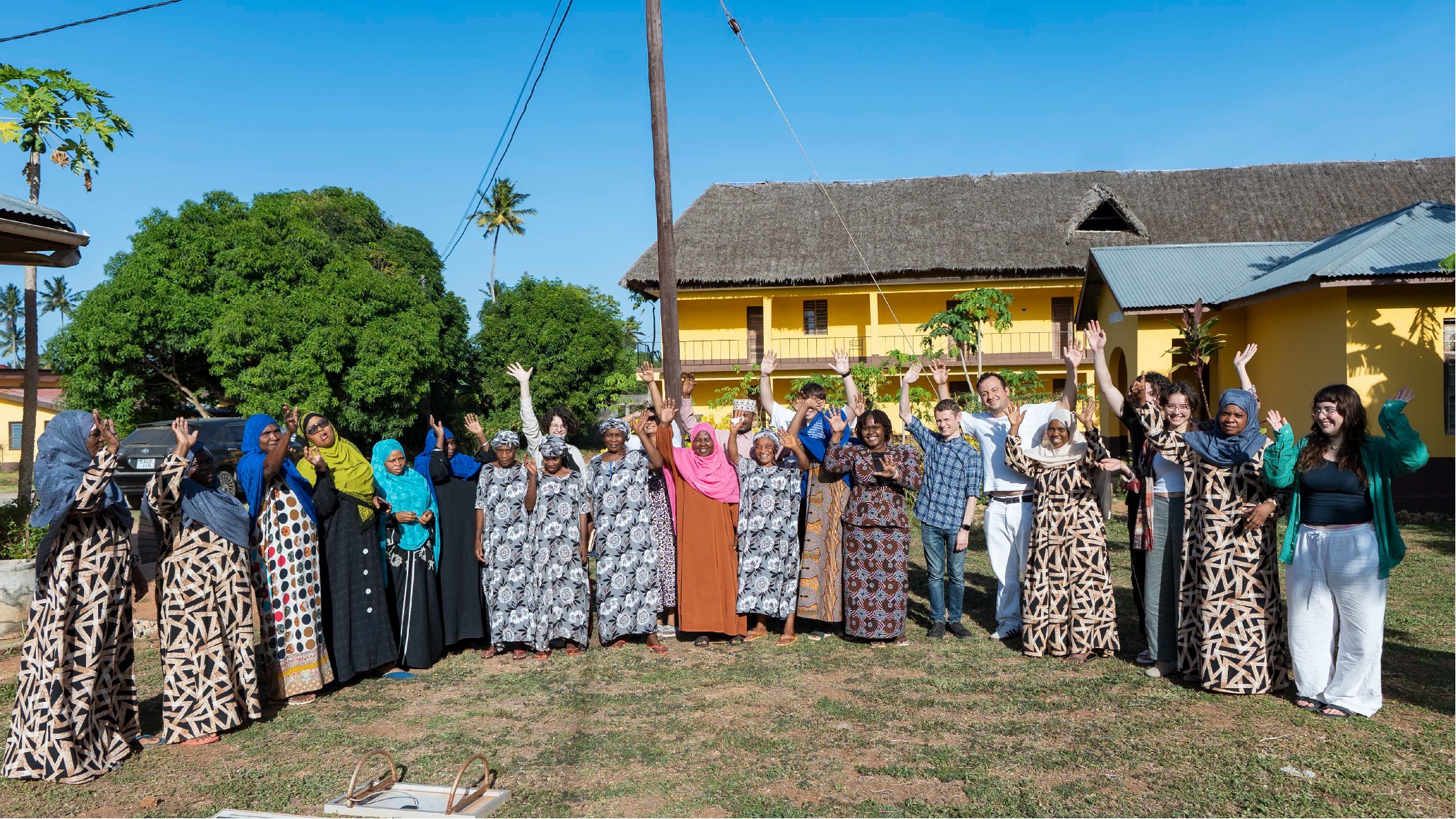
The focus is on financial literacy. The goal for the team of Apple Academy students that came to the campus in Zanzibar was to take technological ideas and get real world feedback to make the application development practical, and much more important, effective. All the best technology developed in the world is only as good as the users it intends to help.
Each of the students who flew from their campus in Naples, Italy to Zanzibar arrived with this singular focus:
“This year our main objective is ambitious and meaningful: deploy a product that truly supports the ENRICH Financial Literacy curriculum,” the group’s report stated.
An effective app would support ENRICH training sessions and “strengthen the learning experience by turning abstract financial concepts into interactive, practical activities.”
The student team also wanted ENRICH trainees to:
- Recognize opportunities to reduce expenses
- Save money intentionally
- Work toward a specific financial goal
With this “ambitious goal” in mind, two intensive days were planned to two test two prototypes developed by the students are part of the year-long training program at the created by Apple together with University of Naples Federico II to teach aspiring developers how to design, build and launch mobile apps especially for Apple’s ecosystem.
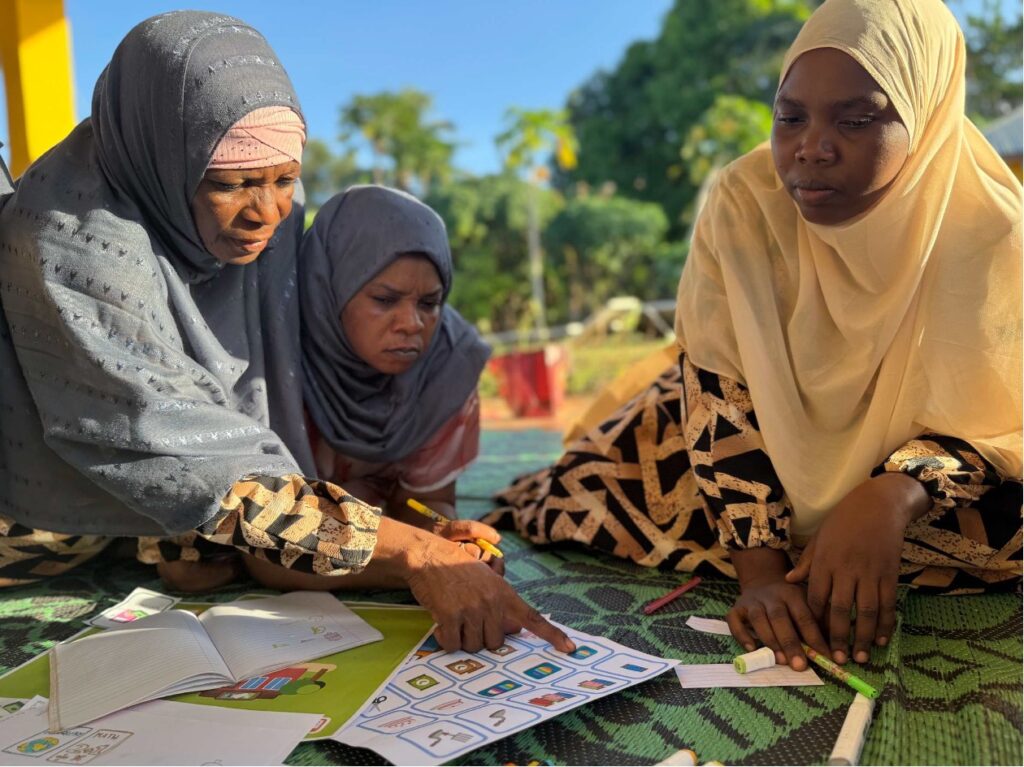
BCI in Zanzibar uses app technology to support its ENRICH and Solar training, according to BCI East Africa Director Brenda Geofrey, technology developed by earlier teams from the Apple Academy in this ongoing partnership between Apple and BCI. Geofrey, who often demonstrates the simple effectiveness of the technology to visiting dignitaries and potential partners believes in the project because of its focus on real-world applications that supports the overall training rather than something created that wouldn’t apply to circumstances for the women in Zanzibar. This technology supports the proven training for ENRICH that was first developed here 11 years ago.
Apple Academy presents two prototypes to BCI in Zanzibar
Prior to the field trip on site, the students developed two prototypes: 1) a collaborative savings game and 2) a spending challenge to employ a real-world situation with a fictional character at the center of the story.
In the first prototype, BCI ENRICH trainees would work together to save enough money to reach a shared goal within three weeks.
As designed, the task for the trainees is to:
- Receive the Weekly Budget and reveal the Weekly Goal card
- Choose a shop to visit on the map
- Buy required or optional items using the weekly budget
- Handle any Unexpected Events
- Complete the week once all required items are purchased
Any leftover money moves into Common Savings. The group then proceeds to the next week and repeats the process. Participants cannot move to the next week until the Weekly Goal is completed.
In the second prototype, called, Zaira’s Smart Spending Challenge, focuses on helping players guide a character named Zaira to make better spending decisions through the following steps:
- The player reveals Zaira’s Saving Goal
- Zaira’s initial spending choices are shown across different shops
- The initial total cost is displayed
- Players review the items and can swap them for alternatives
- After each change, the updated cost is shown
Any money saved is added to Zaira’s savings. Visual feedback supports the learning process: If the updated cost is lower, it appears in green, but if the cost increases, it appears in red.
“Our first day began with user testing with Manu (Singh, ENRICH Global Lead) and Brenda, our key stakeholders, ”the academy team reported, “where we presented both prototypes. Afterward, we participated in the ENRICH Financial Literacy training lesson to better understand how the program is delivered.”
“It is important that we ask the students to teach the women just as we would so they understand the unique environment,” Manu Singh said. “The best solutions are built with communities, not for them. Our partnership with the App Developer Academy is proof that when technology meets grassroots development, the results can be truly transformative. Young developers learn from the ground up, our women gain a self-learning tool designed for their reality, and together we move closer to a world where no one is left behind.”
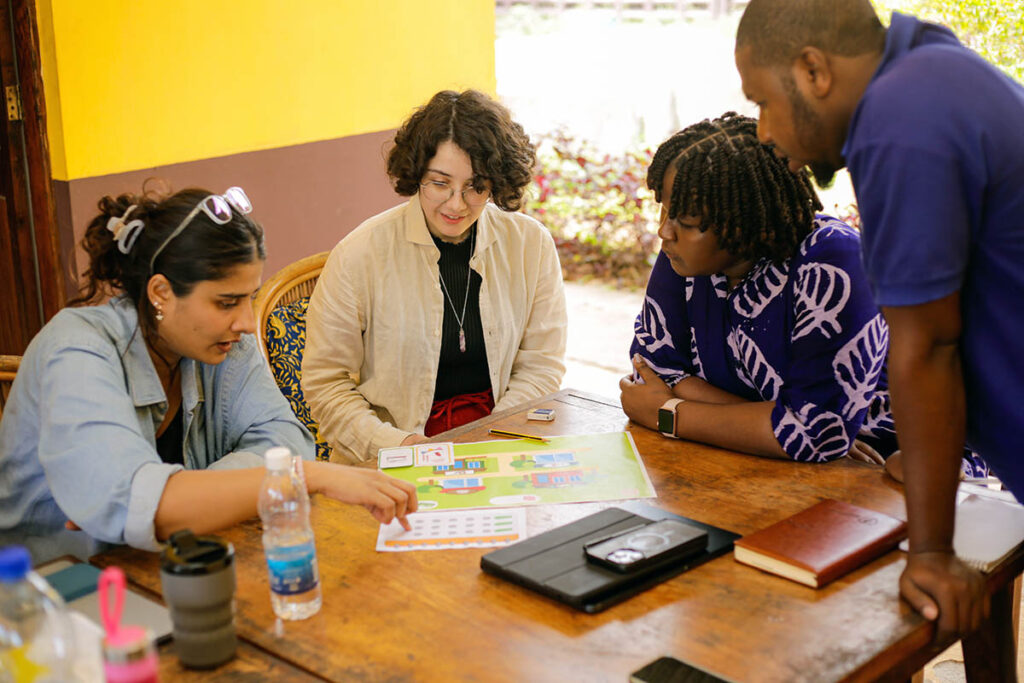
Manu and Brenda guided the academy team through the same tools they use with participants, by showing visual images, asking them to describe what they saw and encouraging group discussion.
They also invited us to share personal experiences related to money and spending.
“This activity proved to be extremely effective at encouraging communication and stimulating critical thinking” the students reported.
BCI Master Trainers become usability testers
In the afternoon BCI’s master trainers joined the effort to conduct usability testing, supported by Brenda and Manu. The students were able to see for themselves the ways these women learn, many of whom are semi-illiterate and have never left the island of Zanzibar. This “real world” feedback is a critical factor for the overall efficacy of the app development, Manu said.
“Several issues quickly emerged,” the students reported.”
- Some icons were unfamiliar and difficult to understand
- Certain preset options were missing from the purchase lists
- Budget decisions were driven mainly by color feedback (red/green) instead of deeper reasoning
- The overall saving goal was sometimes forgotten during the activity
- Different numbers of alternatives for items created confusion
“This feedback was critical,” Brenda said. “It helps make the application work as an educational tool in our program.”
The group agreed and saw how the activity “successfully triggered critical thinking, which is the primary educational goal of the product.”
Day 2 – On hand co-design and testing
Day two focused on co-design activities and testing with trainees and the master trainers. Working directly with participants allowed the students to refine the prototypes based on real cultural and practical insights.
“One important discovery was that birthday parties are not commonly celebrated in Zanzibar,” the students reported. “As a result, any birthday-related content needed to be removed and replaced with more culturally relevant scenarios.”
Also, some of visual elements were not immediately recognizable to the women, including images of rice, notebooks and farming equipment.
“Based on this feedback, Prototype A evolved from a board-game concept into a mobile app prototype,” the students reported.
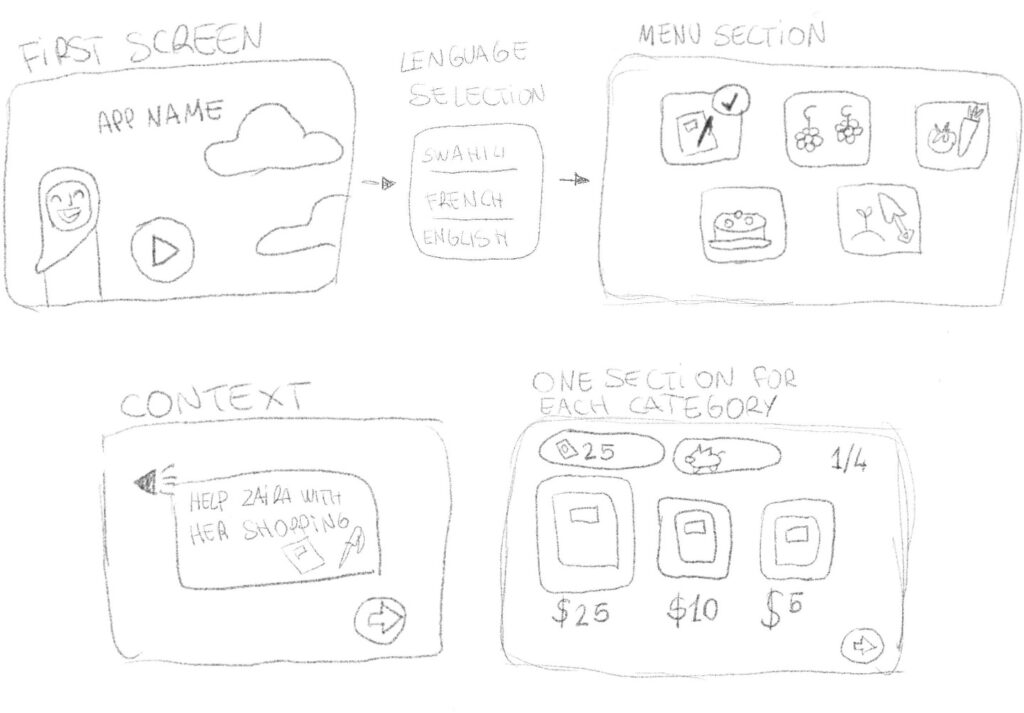
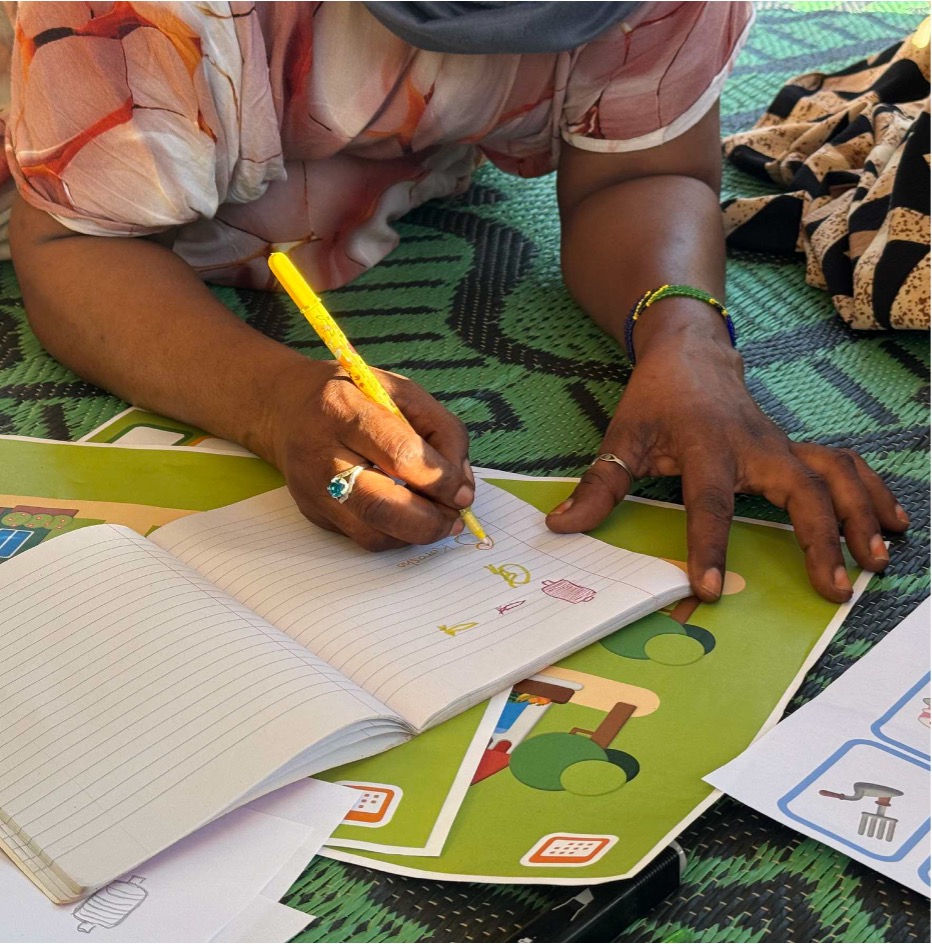
So students and trainees together put literally pen to paper and began co-designing new assets for the app.
“Sketching together and receiving real-time feedback proved incredibly valuable,” the students reported.
Participants suggested more realistic situations that better reflect their daily life. For example, instead of a hospital emergency, which is rare in their context, a more realistic urgent expense would be buying a new school uniform for a child.
“Seeing the women sketch their ideas and use their practical knowledge as both trainee and trainer shows the capability of the women of Barefoot College International. They may not know how to code or build technology but their input empowered the students to use their skills and training even more effectively,” Manu said. “This is a great example of partnership for the overall good of the world.”
In the afternoon we conducted a co-design session with Brenda and Manu to address usability issues observed in Prototype B. Several improvements were identified:
- The intro screen needs a larger start button to capture attention
- Animations could help guide the user
- The saving goal should be more visually emphasized
- Audio assistance is necessary to support illiterate users
“The final summary screen,” the students reported, “should become a moment of recognition for the participant’s work, showing whether the saving goal was achieved and ending with an encouraging message.
“The experience confirmed that the activities are capable of stimulating discussion, collaboration, and financial reasoning, which aligns strongly with the objectives of the ENRICH program.”
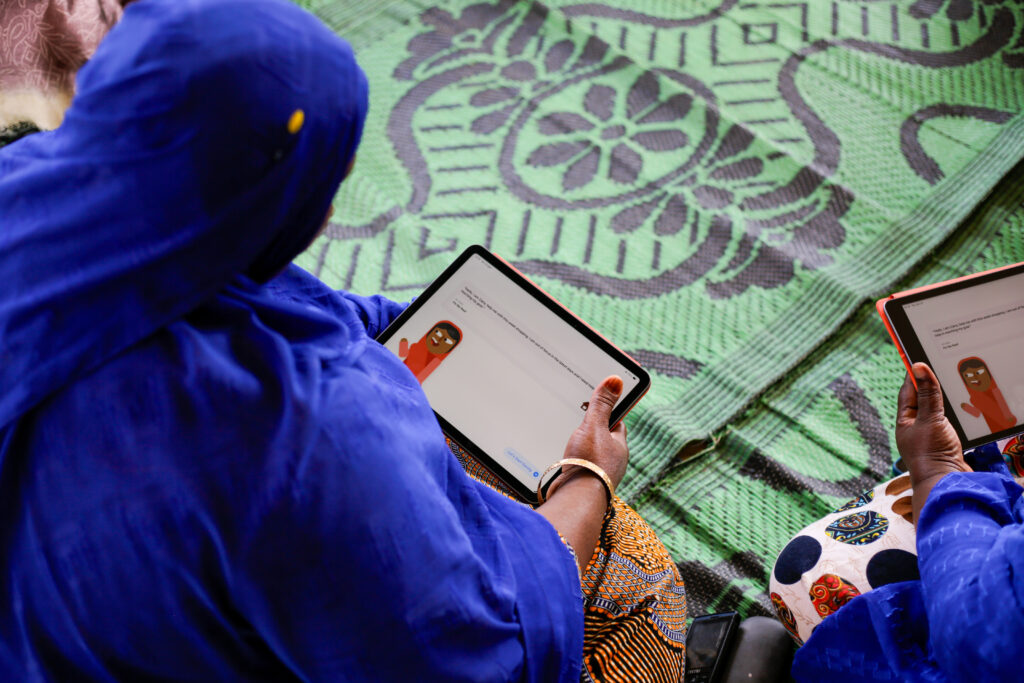
As the trip ended, the students outlined next steps for their development work as they return to school in Italy. The students enjoyed the interactions with the women and said it had been an “incredibly valuable opportunity to test ideas directly with the people the product is designed for.”
And so BCI and Apple’s work continues showing the power of technology when it comes from the users in the real-world rather than designed in technology labs from far off places, which is a core tenant of BCI’s approach to empowering women from the group up.